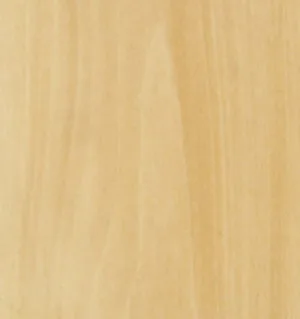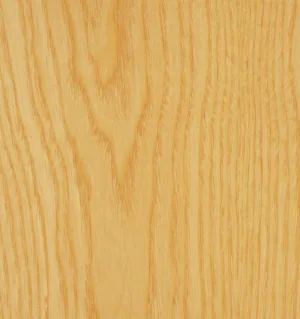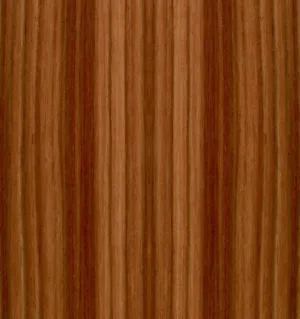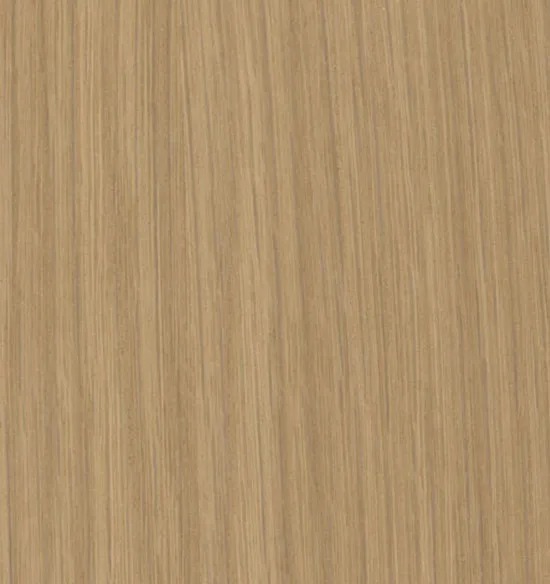
Description
Use: it is used both solid and as veneer for furnishings, furniture and panelling. Since antiquity, it has also been used for shipbuilding, railway ties and wood flooring, as well as for the construction of barrels.
Characteristics: the wood has yellowish sapwood and brown heartwood, in radial sections there is a particular grain called "mirroring". It has a straight, although irregular grain and a coarse texture. European Oak ranges in colour from white-grey to light yellow-brown, with a more or less straight grain and a rough texture due to its porous ring structure. Its weight is very variable depending on the growth of the trunks: if they grew fast, they are denser and hard to work; if they grew more slowly, they are lighter, softer and less difficult to work.
Drying: it must be done carefully and very slowly since oak has a strong tendency to split at the surface and inside, producing a more brittle veneer that tends to break.
Surface: it is suitable for all kinds of surface treatments; aesthetically it can be either flamed or lined.
Gluing: glue is easily assimilated and creates strong joints.